
Litchfield County Arrest Warrants Explained
An arrest warrant lets police take someone into custody, but only after a judge signs off. Connecticut's Division of Criminal Justice lays out the sequence. Police investigate first. A prosecutor then reviews the evidence. A judge decides whether to sign the request, and once signed the warrant can open the criminal case, since probable cause is just the threshold for issuing process. The Connecticut Superior Court issues criminal process in Litchfield County, while local police and Connecticut State Police carry it out. There is no county sheriff arrest-warrant office. The court clerk keeps the judicial record, police handle execution, and the court sets release in Litchfield County, so knowing those roles saves fruitless calls to an office that does not exist.
Litchfield Arrest Warrants Reach a Judge
In Litchfield County, an officer's investigation may end in a sworn complaint or affidavit. A prosecutor reviews the request. A judge weighs the facts and signs. Only then may law enforcement arrest the named person. The Connecticut criminal-process statutes supply the legal framework.
Investigation → prosecutor review → probable-cause application → judge's decision → police execution → booking and release review. A summons may replace custody in some cases, but failure to answer a summons or later court order can produce different process. Police cannot recall a signed court warrant, and a public database cannot guarantee that a recent order is absent.
Inside a Litchfield County Arrest Warrant
A Litchfield County warrant file may hold several papers, not one sheet. The complaint or affidavit states the claimed facts. A docket names the court case. A warrant entry records the process, and later documents can show the arrest, bond, release, or final outcome. What you may see depends on the custodian, the case stage, and sealing or confidentiality law.
| Docket or Process Number | Identifies the case or warrant entry; format varies by record. |
|---|---|
| Named Subject | Identifies the person in the judicial process; do not republish private identifiers. |
| Charge or Statute | States the alleged offense, not a conviction. |
| Issuing Judge or Court | Shows who authorized the process and which clerk holds it. |
| Probable-Cause Material | Complaint or affidavit, subject to sealing and access limits. |
| Issue and Service Dates | Distinguish authorization from execution. |
| Bond or Release Order | Shows court-set financial or nonfinancial conditions when public. |
The public case lookup is only a display. A bare code shows no issue date or court. For Litchfield County surrender planning, ask the clerk to confirm the current process and what record can be released.
Three Litchfield Arrest Warrant Data Layers
Connecticut offers three separate information layers. The Judicial Branch lookup can lead to a named court case. Office of Policy and Management data gives aggregate warrant counts. PRAWN moves individual warrant data inside authorized justice systems. None of them is a public, name-based Litchfield County arrest warrant roster.
| Source | Public Use | Key Limit |
|---|---|---|
| Judicial case lookup | Find a docket and court lead | Not official or guaranteed current |
| OPM reports | Review aggregate trends | No individual name search |
| PRAWN | Justice-agency operations | Law-enforcement access only |
The official PRAWN program page describes that restricted warrant network and who may use it. Treat any public result as a lead. Then call the issuing clerk. An empty result can mean a new warrant, a spelling issue, sealing, juvenile protection, publication delay, or the wrong court location in Litchfield County.
Serving Arrest Warrants in Litchfield County
Local police and Connecticut State Police serve criminal arrest warrants in Litchfield County. Service can happen almost anywhere. Officers may come to a residence, act during a traffic stop, or make contact on an unrelated matter. A surrender arranged with counsel and the agency is another route. Officers confirm identity, execute the order, and begin booking. The warrant still remains a court order. After custody, the person may face arraignment, a release decision, bond conditions, or commitment under a mittimus, a court document directing custody. Bail and Pretrial Services at the Torrington courthouse handles release questions at 860-626-2160. That number is not a public warrant search line. No Litchfield office publishes a bond-window schedule, accepted payment instruments, or a local bond table. The Western District state police headquarters sits at 452-B Bantam Road in Litchfield. Troop L is next door at 452A Bantam Road. Troop B works out of North Canaan. Call the agency tied to the case, confirm surrender directions before travel, and reserve 911 for emergencies.
Litchfield Police Execute, Courts Set Bond
The agency executing the warrant can explain where it will receive a person and how officers process the paperwork in Litchfield County. It cannot change the charge. It cannot recall the order, promise release, or stand in for the judge's bond decision. Those questions go elsewhere. The clerk, the court, Bail and Pretrial Services, and counsel handle them. The official Connecticut release and bail chapter holds statewide law. It is not a fixed local price chart.
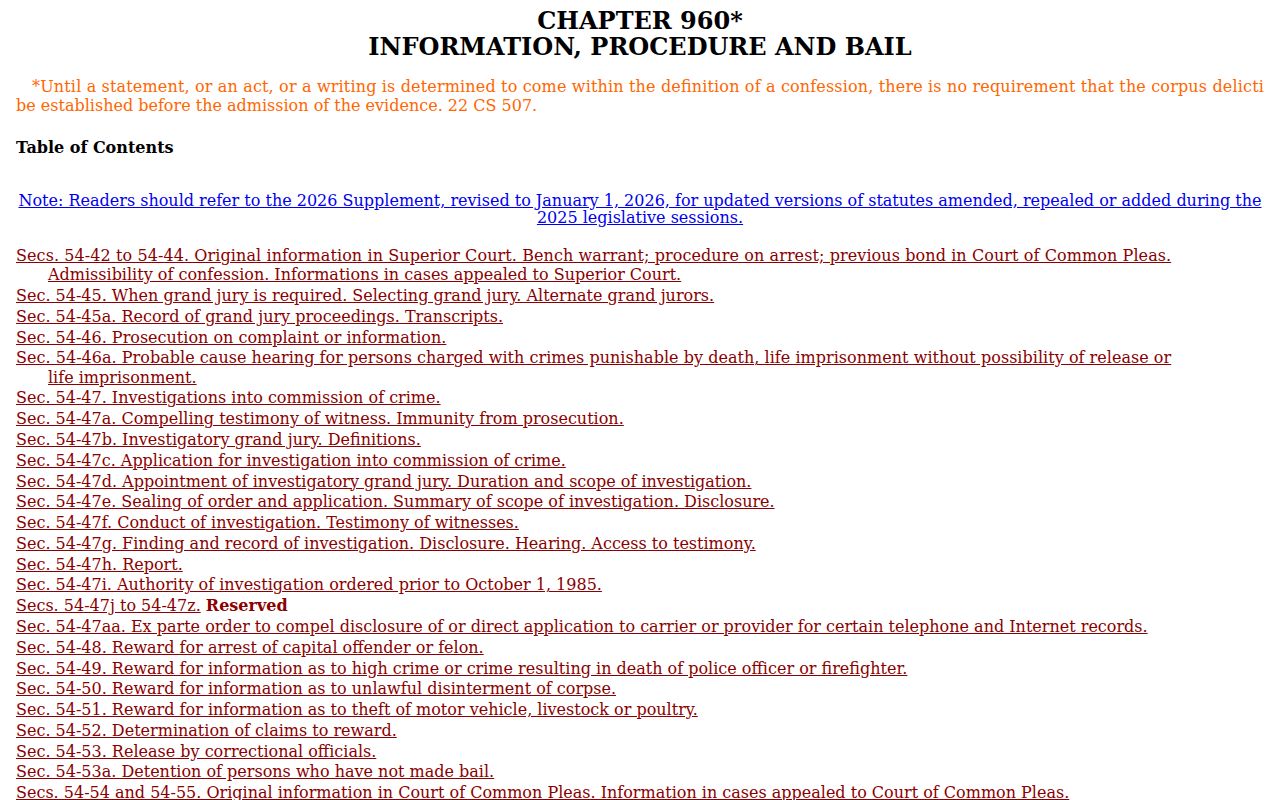
Release can mean personal recognizance, nonfinancial terms, cash, or surety, all set by a Litchfield County court. Never guess the amount from a charge name. And never pay an unsolicited caller.
Comparing Arrest, Summons, and Bench Warrants
These tools call for different responses in Litchfield County. An arrest warrant commands custody after probable-cause review. A summons tells a person to appear, with no warrant arrest on the spot. A bench warrant answers a missed duty in a court matter. Each still points to a named court and date.
| Feature | Arrest Warrant | Summons | Bench Warrant |
|---|---|---|---|
| What it directs | Take the person into custody | Appear as directed | Bring the person before court |
| Basis | Probable cause | Charge handled without initial custody | Missed appearance or unmet order |
| Issuer | Judge | Court or authorized process | Judge |
| Response | Counsel, surrender, release | Attend on time | Recall, appearance, release |
A missed date is serious. Anyone who skipped one can review the Litchfield County bench warrant process before acting. Paying a ticket will not cancel a judicial order. Neither will a call to police.
Litchfield Arrest Warrant Applications and Access
Connecticut General Statutes section 1-215 covers qualifying arrest records, including certain warrant applications and affidavits. That does not open every file. A seal, juvenile law, an active investigation, privacy protection, or another statute can block release. Ask the Litchfield County custodian for the public portion. Do not assume the whole file must be produced. The official public-record and arrest-record chapter contains sections 1-210 and 1-215.
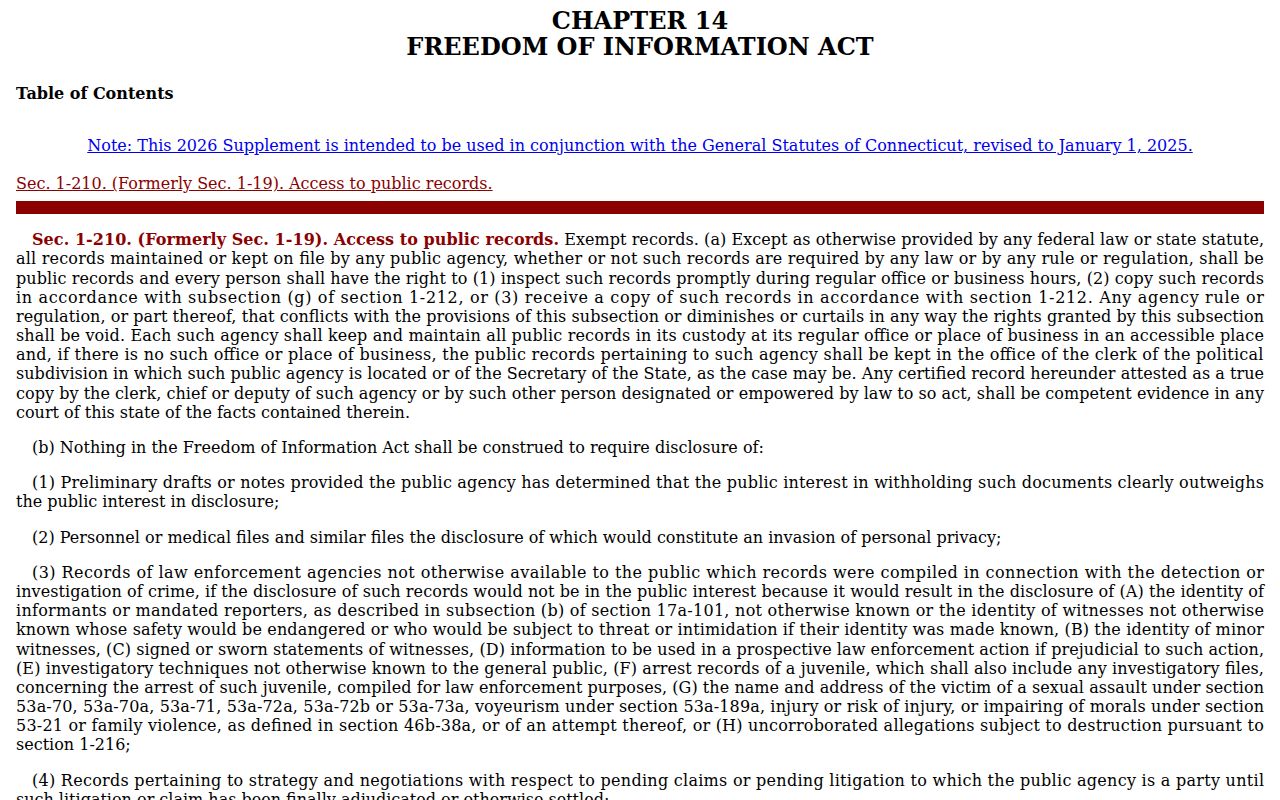
In Litchfield County, a focused records request can list a docket, a document, a date range, and an agency. It can even name the format you want. The response shows what can be released, though it will not confirm from the clerk whether the warrant is still active today.
Litchfield Arrest and Search Warrants Differ
An arrest warrant lets officers take a named person into custody. A search warrant works the other way: it lets officers search a stated person, place, or property for described evidence. Connecticut section 54-33a lays out the search-warrant complaint, the probable cause showing, the description, the issuing judge, the officers who execute it, and the timing. In Litchfield County, remember that a search warrant is not a status record you can track in the public criminal case lookup. The current criminal process chapter holds both the arrest-process and search-warrant provisions.
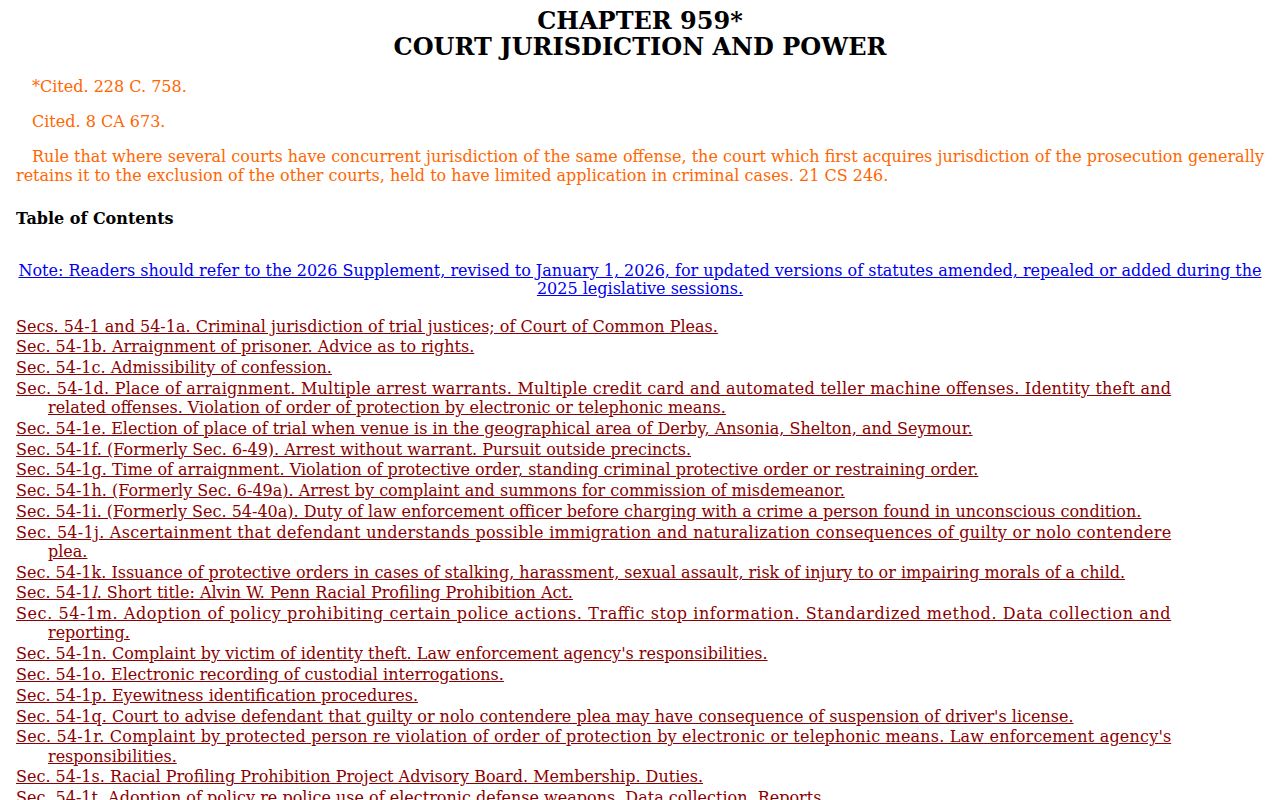
Search materials can also stay sealed while disclosure might harm an investigation. Before reading anything into a docket label in Litchfield County, confirm the warrant type, the issuing court, and its legal purpose.
If There's an Arrest Warrant for You
Check on the process first. Do not just show up unplanned. Use the Judicial Branch lookup to get a docket lead, then call the right clerk: GA 18 criminal and motor vehicle at 860-626-2300, or Litchfield Judicial District public information at 860-626-2100. Ask about the issuing court, the process type, counsel, where to surrender, what identification to bring, any release review, and your next date. A lawyer can verify the Litchfield County warrant, deal with the clerk and agency, arrange voluntary surrender when allowed, prepare for bond, and file a motion to recall or quash if there is a legal basis. Only the court can withdraw its own process. Posting bond settles release, but the underlying case continues. Keep written proof of everything, and show up for every new date.
Important: Speak with a lawyer before surrender; an active arrest warrant can be served during any lawful police contact.
For eligible criminal matters, the Litchfield Public Defender can be reached at 860-626-2602. The Court Service Center at 860-626-2529 helps with navigation but gives no legal advice. Out-of-state and federal warrants need counsel and the issuing jurisdiction, since a Connecticut clerk cannot recall another jurisdiction's order.