
Litchfield County Bench Warrants Explained
Connecticut runs one unified Superior Court system, so in Litchfield County there is no county sheriff warrant desk and no city municipal criminal court to call. Geographical Area 18 in Torrington handles arraignments, misdemeanors, motor-vehicle matters, infractions, and related appearance issues, while the Litchfield Judicial District takes the more serious criminal cases. A judge may issue bench or rearrest process when someone misses a required date, breaches a release term, violates an order, or fails to return after a continuance, and Connecticut criminal-process law covers those situations. The order directs an authorized officer to bring the person before the court. The underlying case stays open, often needing a new date, a plea, a compliance step, or a release review.
Litchfield Bench Warrants Are Not Convictions
A warrant entry records court action and nothing more. It does not decide whether the underlying charge is true. A pending charge, an appearance order, a warrant, a service return, a release order, and a final disposition are each distinct parts of a Litchfield County court file, and the clerk can identify the current entry. Questions about challenging a bench warrant belong with counsel.
- Bench warrant
- Process often tied to a missed appearance or unmet order.
- Rearrest warrant
- Process in a pending criminal case linked to an appearance or release breach.
- Recall
- Court action withdrawing outstanding process.
- Quash
- Court action setting process aside when legally proper.
- FTA
- Failure to appear for a required court event.
The same Litchfield County matter may carry different labels on a docket, in an aggregate report, and on an agency call. Ask for the exact type, issue date, court, and current status. The word warrant alone never settles the case result.
How Litchfield County Bench Warrants Are Issued
Every Litchfield County bench warrant begins with a duty the court already imposed, such as an appearance order or a release condition. When the record shows noncompliance, a judge may authorize bench or rearrest process. The clerk records that action, and authorized justice users can receive it through state systems. Police serve the order; they cannot create, change, or cancel it.
The usual path is: required event → missed duty → judicial review → warrant or rearrest process → service or recall → case resumes. A late update, sealed matter, protected record, or wrong court assignment can keep the full path off a public display. A capias needs context too. Connecticut uses capias or capias mittimus language in family-support, civil, and certain statutory matters. It is not a universal name for every criminal failure to appear.
Check a Litchfield Bench Warrant
Start with the Judicial Branch criminal and motor-vehicle case lookup, searching by legal name or docket number as the live form allows. A Connecticut docket may combine a court location, a case type such as CR or MV, the year, a sequence, and a suffix. Treat the display as a lead only. The Judicial Branch cautions that it is not the official court record, and it can be incomplete or out of date, so a Litchfield County reader should confirm with the clerk.
- Gather the legal name, birth date, docket, town, and approximate date.
- Review the public docket for a useful court and case lead.
- Call GA 18 at 860-626-2300 or Litchfield Judicial District at 860-626-2100.
- Ask if the process is a bench warrant, rearrest warrant, capias, or another order.
- Confirm the court, next step, location, identification, hours, and release instructions.
Court assignment in the region does not follow county lines alone. Watertown cases may route to GA 4 in Waterbury, while Plymouth cases may route to GA 15 in New Britain. Give staff the town and case type. A blank online result never proves that no current Litchfield County bench warrant exists.
Bench Warrants and Arrest Warrants Compared
Bench warrants and arrest warrants can both authorize custody, but they arise at different points. An arrest warrant usually starts a criminal case after probable-cause review. A bench or rearrest warrant answers an unmet duty in a case already before a Litchfield County court. A search warrant is different again, since it authorizes a search of stated property rather than any person's arrest status check.
| Feature | Bench or Rearrest | Arrest Warrant |
|---|---|---|
| Basis | Missed date or breached order | Probable cause of an offense |
| Stage | Usually an existing case | Often begins a case |
| Issuer | Superior Court judge | Superior Court judge |
| First step | Docket lead, then clerk | Clerk and executing agency |
| Response | Recall, appearance, release | Surrender, release, defense |
For the probable-cause route, see the Litchfield County arrest warrant search. Only the issuing court can recall or quash judicial process.
PRAWN Is Not a Litchfield Bench Search
The Paperless Arrest Warrant Network, or PRAWN, moves warrant data among authorized Connecticut justice and law-enforcement users, with no public name search and no self-service result list. Office of Policy and Management reports break out aggregate FTA, VOP, and OTI categories, but they cannot reveal whether one named case carries a live Litchfield County bench warrant. The Connecticut FOI portal explains general record access, not instant status checks.
A focused records request goes to the true custodian: Judicial Branch offices for court records, the police agency for police records. Sealing, juvenile confidentiality, and active-investigation limits may restrict release of Litchfield County materials.
Resolving a Litchfield County Bench Warrant
Resolving a Litchfield County bench warrant does not automatically end the charge or the case. Ask early whether counsel may seek recall, whether an attorney walk-through is allowed, whether a scheduled surrender is required, and whether release happens at court or elsewhere. No standard Litchfield recall form, filing fee, walk-through schedule, or local bond table is published. A lawyer can contact the clerk, explain the missed date, file a suitable motion, and request a new setting or a release review. The Court Service Center at 860-626-2529 helps with navigation but cannot give legal advice. The Public Defender at 860-626-2602 serves eligible criminal matters. Bail and Pretrial Services at 860-626-2160 takes release-process questions.
Important: Confirm the court, process type, surrender place, identification, and bond instructions before appearing at a courthouse or police station.
Posting bond may allow release while the Litchfield County case stays pending. It does not dismiss a charge or erase the next appearance. Keep written proof of court action, and verify the clerk's record shows the new status.
Litchfield Bench Warrant Access Limits
Connecticut decides record by record. Sections 1-210 and 1-215 govern public records and qualifying arrest material, though sealing law and juvenile protections can still block access. So a Litchfield County agency might hand over a docket entry while withholding protected affidavit text. Ask for your own file by docket and request the releasable portion. The official FOI questions page spells out the details.
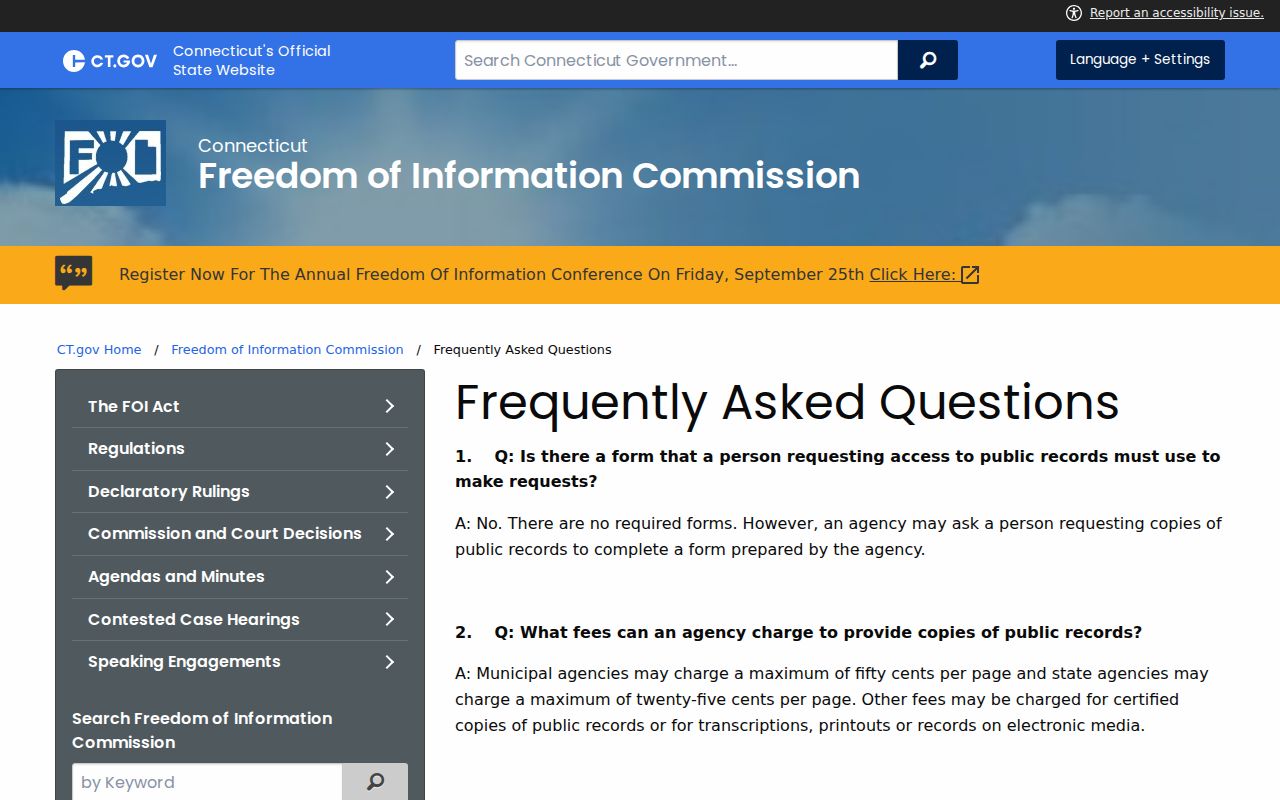
FOIA does not require a Litchfield County agency to build a new analysis or certify that a warrant is active. The clerk is still the place to ask. Keep a copy of your request and any response before filing a Freedom of Information Commission complaint.
Finding the Court That Issued the Warrant
Superior Court sits at 50 Field Street, Torrington, CT 06790, and it is the main public entry point in Litchfield County. GA 18 handles much of the criminal and motor-vehicle docket there at 860-626-2300. For district records or serious matters, the Litchfield Judicial District line is 860-626-2100. Call ahead, since the court posts no separate warrant-counter schedule.
GA 18 Clerk
Criminal, motor-vehicle, misdemeanor, infraction, and arraignment matters.
860-626-2300
Litchfield Judicial District
District records, serious criminal matters, and routing help.
860-626-2100
Local and State Police execute criminal process. Judicial marshals run court security and custody, while State marshals serve civil process and qualifying capias matters. None of them maintains a public Litchfield County bench warrant roster.
Request Litchfield Bench Warrant Records
Address your request to the true custodian and name a record that already exists. Give the docket, the date range, the court or agency, and your preferred format. Leave out Social Security numbers and any unrelated private facts. Even when Connecticut FOIA covers the agency holding a related police record, court rules and sealing orders still apply in Litchfield County. The state's FOI request instructions confirm that no universal form is needed.
Request an existing docket, application, affidavit, service return, order, or policy. A custom list of named people is not something an agency must build. Copies and a live status check answer different questions. Once records arrive, confirm active process with the Litchfield County clerk.