
Checking for a Warrant in Litchfield County
Litchfield County posts no county sheriff warrant list. A reliable Litchfield County warrant check starts with the Connecticut Judicial Branch criminal and motor-vehicle lookup, then goes to the clerk assigned to the docket. What appears is a lead, not the record itself. Displays can lag, omit sealed files, or change with spelling and court routing. Gather the legal name, date of birth, town, approximate date, agency, citation, and docket number first. Do not send a Social Security number or unrelated family details through an unverified form. If a warrant looks possible, stop there. A lawyer can help you plan the next step.
- Identify the likely court. GA 18 handles much of the county, but Watertown uses GA 4 and Plymouth uses GA 15.
- Search the state case tool by the live name or docket options and read its disclaimer.
- Call the assigned clerk to confirm the process type, issuing court, status, next date, and release route.
- Use local police or State Police non-emergency contact only when directed for execution or surrender instructions.
- For an existing record not online, request it from the actual court, police, or marshal custodian under the proper access process.
Litchfield County Warrant Search Fields
The Judicial Branch interface changes partly on the fly. Check its labels and required markers live. These documented routes narrow a Litchfield County warrant record, though the court lookup is no dedicated warrant database.
| Control | Use | Limit |
|---|---|---|
| Last name | Primary name-based case lead | Verify spelling and live required marker |
| First name | Narrows a common-name result | Shown where the current interface permits |
| Date of birth | Helps distinguish identities | Use only for a lawful, authorized check |
| Docket number | Direct route to one court case | Copy every location, type, year, sequence, and suffix part |
| Search, clear, help | Runs or resets the live form | Button wording may change |
For a Litchfield County case, the official criminal docket search shows the live route, and this Judicial Branch criminal docket endpoint is the official public view. Its disclaimer still governs. No public warrant-status field appears.
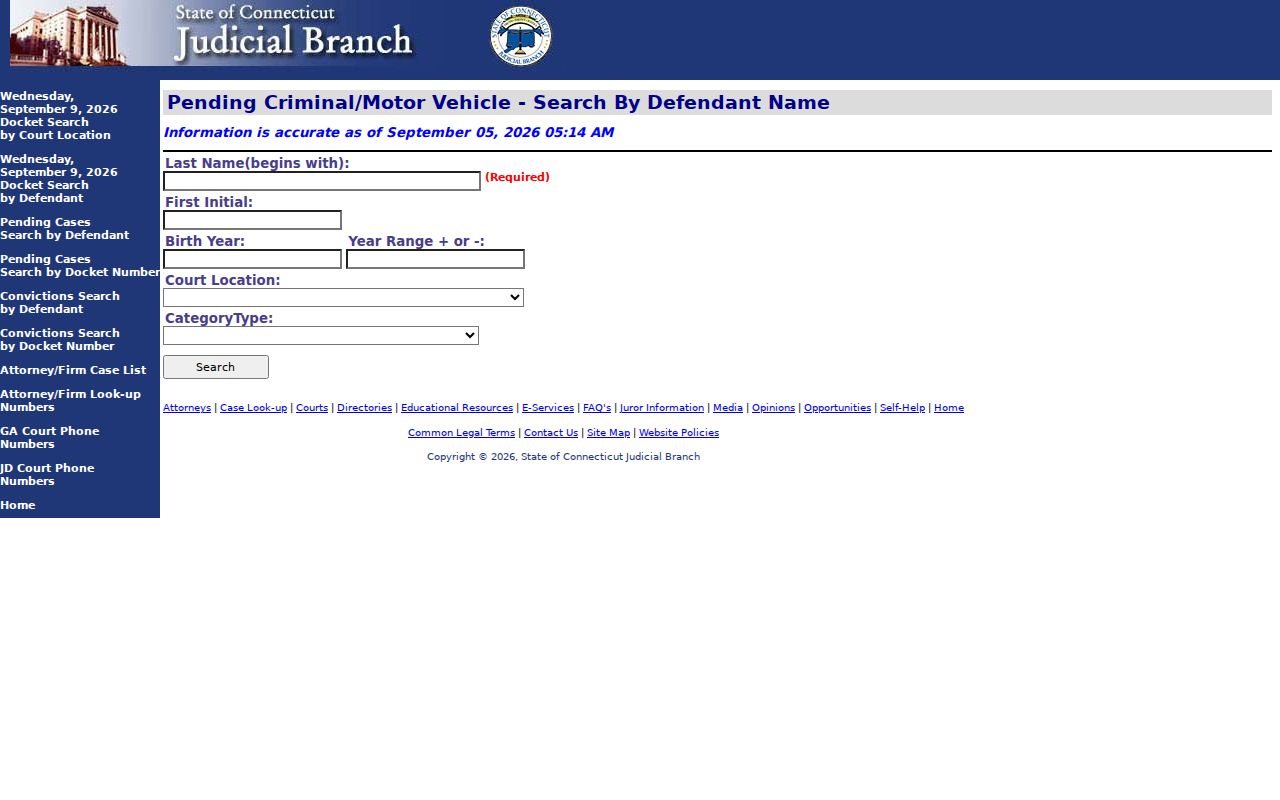
This view supports the docket-first step, followed by direct clerk confirmation.
Litchfield County Warrant Types
Connecticut terms explain why process issued. They also show which office handles it, and in Litchfield County the assigned Superior Court and exact docket matter more than any broad third-party label.
| Warrant type | How it arises | Authority |
|---|---|---|
| Arrest warrant | A complaint or affidavit supports probable cause | Superior Court judge |
| Bench or rearrest warrant | A missed appearance or release-order violation | Superior Court judge |
| Search warrant | Probable cause supports a search of a described place, person, or property | Authorized judge |
| Capias or capias mittimus | Failure to appear or obey process in a qualifying criminal, civil, or family matter | Issuing court under the governing statute |
State marshals serve civil and family-support capias papers. In Litchfield County, criminal arrest and rearrest warrants go to local police and Connecticut State Police. Capias does not always mean criminal FTA.
Litchfield County Warrant Court Map
Litchfield County warrant records center on the courthouse, not a sheriff headquarters. Litchfield Judicial District and GA 18 share 50 Field Street, Torrington, CT 06790. GA 18 handles arraignments, misdemeanors, motor-vehicle matters, and infractions. The Judicial District takes the more serious criminal matters and broader Superior Court work.
Litchfield Judicial District
50 Field Street, Torrington, CT 06790
860-626-2100
District-assigned and more serious court matters
Geographical Area 18
50 Field Street, Torrington, CT 06790
860-626-2300
Criminal and motor-vehicle clerk route
Bail / Pretrial Services
Same Torrington courthouse
860-626-2160
Release-process questions after clerk confirmation
Watertown routes to GA 4 in Waterbury. Call 203-236-8100. Plymouth goes to GA 15 in New Britain at 860-515-5080. Confirm the docket location before travel, because county lines alone do not pick the court.
Inside a Litchfield County Warrant Record
A Litchfield County warrant record may link several documents. The set can include a complaint, affidavit, docket, order, process entry, service return, arrest record, bond or release order, mittimus, and disposition. Exact fields vary with the custodian.
| Docket number | The Connecticut case identifier, copied as the full location-type-year-sequence-suffix value. |
|---|---|
| Person and identifiers | Legal name and limited identity fields when public; do not republish birth dates or addresses. |
| Case basis | Charge, statute, complaint, affidavit, or alleged appearance violation, not proof of guilt. |
| Issuing court | The GA or Judicial District and the judge or court authority, when public. |
| Process and dates | Warrant type, issue date, service status, return date, and next court date where available. |
| Release and status | Bond or release condition, recall, quash, disposition, or sealing flag, subject to clerk confirmation. |
Read a Litchfield County record in layers. The docket gives context, the process entry states what the court ordered, the release order controls what follows custody, and the clerk confirms what is still current.
Litchfield County Warrant System Limits
PRAWN, the Paperless Arrest Warrant Network, is Connecticut's internal statewide warrant infrastructure. It carries arrest-warrant data among authorized justice and law-enforcement users. No public search exists. CRMVS supports criminal and motor-vehicle information in the justice environment, and it is also closed to public self-search. The PRAWN program page explains this restricted layer. OPM publishes monthly aggregate counts built from warrant data. For Litchfield County readers, they are context only. Only the clerk can answer for a specific docket. The general Judicial Branch case-lookup page is the official source for the broader public court-search view.
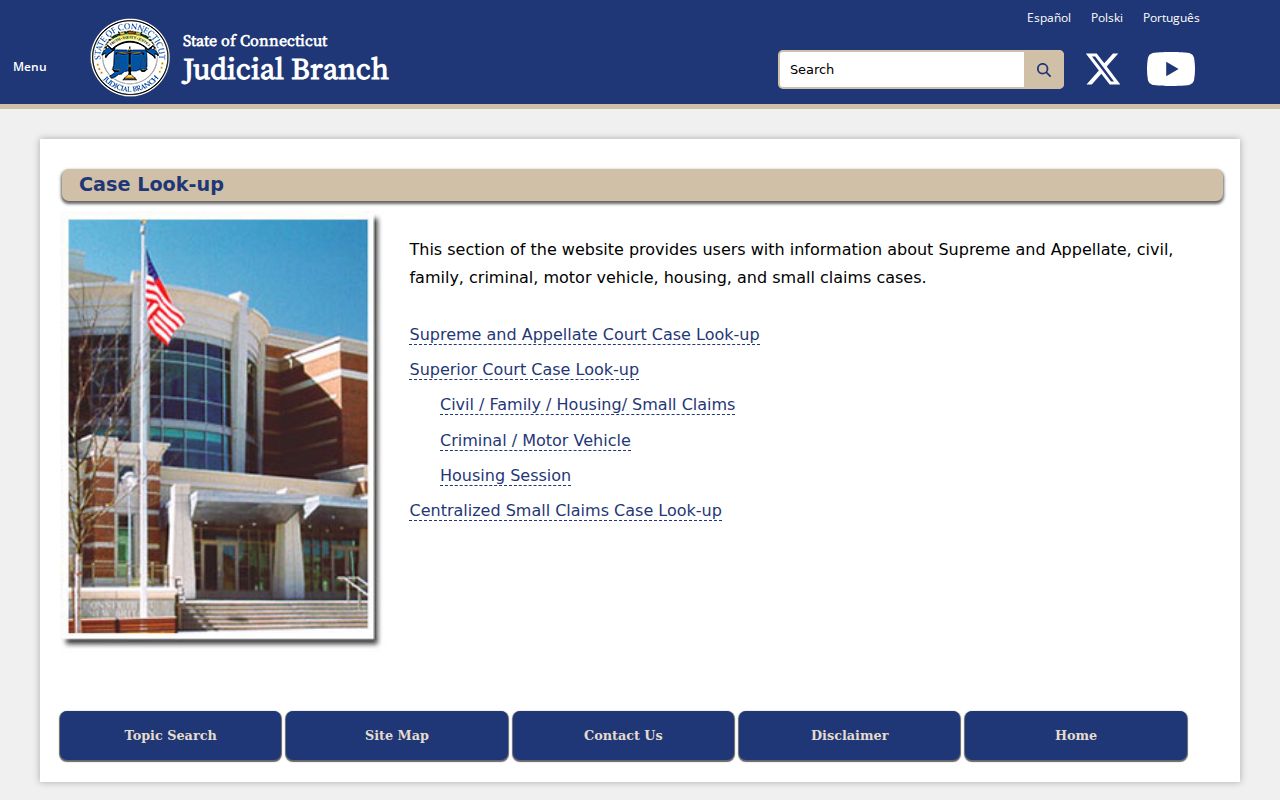
This public route finds court context, but Litchfield County searchers cannot reach the restricted PRAWN record without authorized credentials.
Issuing and Serving Warrants in Litchfield County
The flow is direct. Police investigate, prosecutors may review a criminal warrant request, and a judge decides whether legal grounds support process. Authorized police then execute the signed warrant. In Litchfield County, the criminal enforcement channels are local police departments and Connecticut State Police. Judicial marshals handle courthouse security and custody, not a public warrant desk. Connecticut ended the county sheriff system in 2000. State marshals now serve civil process and qualifying capias matters under State Marshal Commission rules. They run no Litchfield County criminal warrant list. Ask the agency on the case for surrender directions. The issuing clerk confirms the court record, and only the court can recall or quash process.
Note: Police can explain enforcement procedure, but they cannot change a judge's warrant or promise the court's bond terms.
Litchfield County Warrant Terms
Short codes show up across Connecticut court and aggregate material. Knowing them keeps an OPM count or Litchfield County court entry from being read as a final case answer.
- FTA
- Failure to appear at a required court setting.
- VOP
- Violation of probation, a distinct basis shown in aggregate warrant reporting.
- OTI
- An OPM aggregate category described as other than incarcerated; it is not a personal public-search result.
- Recall
- Court action withdrawing outstanding process.
- Quash
- Court action setting aside process in an appropriate case.
- Mittimus
- A commitment document directing custody under a court order.
"Active" means the process is still outstanding in the controlling system, not that a copied web page is current. "Served" means enforcement or delivery. The case itself may still continue after service. Ask the Litchfield County clerk to translate any code on the docket.
If You Have a Warrant in Litchfield County
A Litchfield County warrant only stops being outstanding once the issuing court gets what it asked for. That could mean a recall motion, a new court date, a surrender with booking, or a bond with release conditions. The case behind the warrant often keeps going, whether it is criminal, motor vehicle, family support, or civil. Call the clerk first, and bring an attorney into it early.
Important: Confirm the warrant and seek legal advice before appearing; verify the location, hours, identification, security, and release instructions first.
Litchfield County publishes no walk-in schedule, bond window, payment list, or clearing fee, so get each step from the clerk directly. Never pay someone who calls demanding money on the spot. Hang up and dial a number you looked up yourself. The Court Service Center can be reached at 860-626-2529. Eligible criminal matters may qualify for the Public Defender at 860-626-2602. In practice the order runs: confirm the warrant, ask about counsel or a recall, surrender if the court directs it, complete booking or court processing, learn your release terms, get the new date, and then work the case to resolution. Save every receipt and every order.
Litchfield County Warrant Bond Questions
Release terms in Connecticut depend on the facts of each case, and a charge name alone tells you nothing about the outcome. The court might release someone on personal recognizance, which is simply a promise to appear. Or it might set a cash bond, a surety bond backed by a licensed provider, another condition, or a hold. Before you show up, ask the clerk some plain questions. Must surrender happen first? Where is an approved bond accepted, what payment forms are allowed, and how will you get a receipt? Bail and Pretrial Services can walk you through the mechanics once the court has identified the matter. Posting bond settles custody only. The charge stands, and the next court date stands too. Under Connecticut bail and release law, skipping a later appearance can trigger forfeiture and new process. And do not borrow a dollar figure from some other court's guide; no local schedule in Litchfield County can be read that way.
Litchfield County Warrant Records and Public Access
The Connecticut Freedom of Information Act opens many existing agency records to the public, though exemptions apply. Court records also answer to Judicial Branch rules and statutes. A good request names the office that actually holds the file, gives a date range and docket if you have one, and states the format you want. FOIA cannot force an agency to build a new list of people. It also will not confirm a warrant status the same day.
Key Rules:
CGS §1-210 gives general public-record inspection and copy rights, subject to exemptions.
CGS §1-215 addresses qualifying arrest records and warrant applications while preserving legal limits.
CGS §54-2a governs specified criminal, bench, and capias process and central entry.
CGS §46b-124 protects juvenile court and police records, including related warrant material.
A Litchfield County file may come back partly closed. Sealed records, active investigations, juvenile cases, and protected details can all be withheld or redacted. Ask for whatever portion is releasable instead of assuming the whole file is public.
Litchfield County Warrant FOIA Route
Aim your FOIA request at whichever agency holds the record you want. Court files go to the Judicial Branch. Police material belongs with local or State Police. Qualifying marshal process runs through the State Marshal Commission channel. The official FOI request guidance confirms that no universal form is required, so keep copies of what you send and what comes back. For criminal and motor-vehicle matters, the Judicial Branch criminal and motor-vehicle landing page is the official doorway to this public access route.
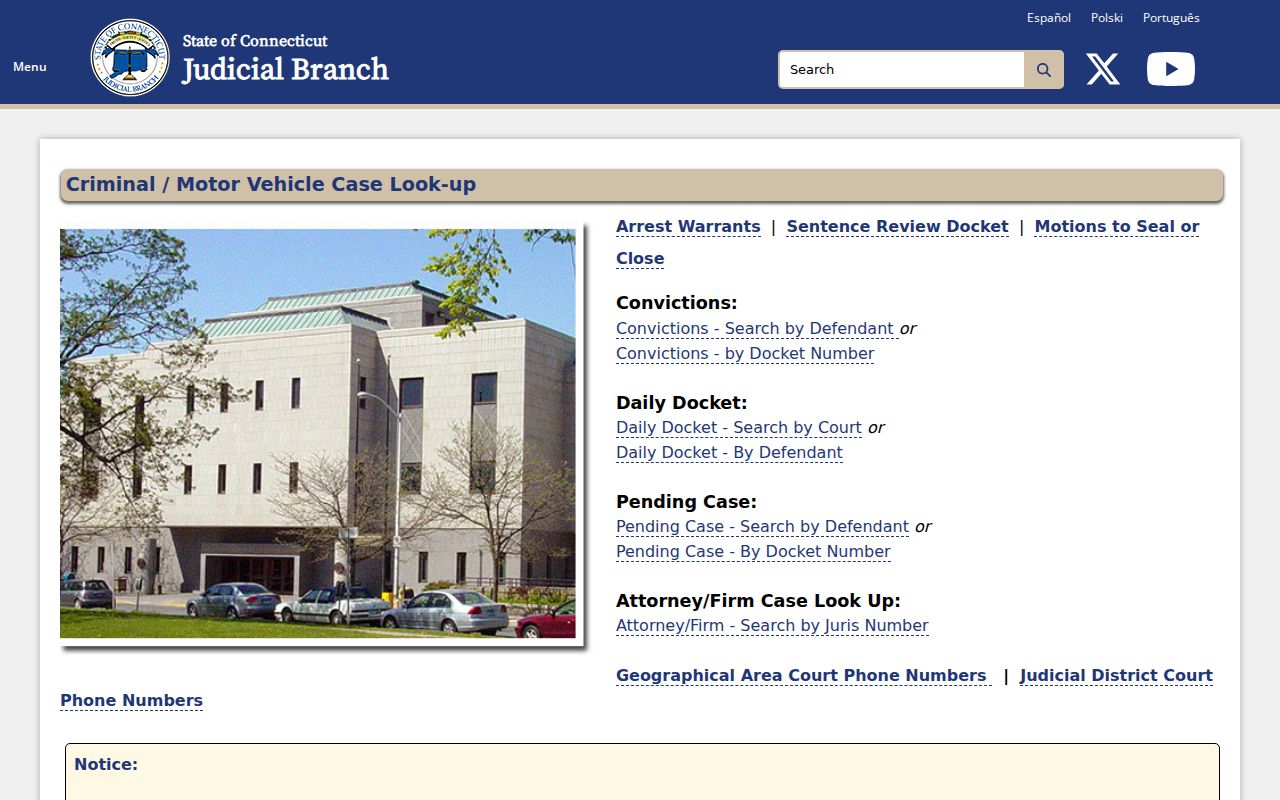
Turn to FOIA when the record you want sits with a specific custodian and the court lookup does not reach it. Copies carry statutory caps: municipal agencies generally charge no more than 50 cents per page, and state agencies generally no more than 25 cents, subject to current law and format. Litchfield County sets no published fee for a warrant-status call, a certified warrant copy, a special clerk search, or a marshal-process copy. Ask for a quote before ordering. One more boundary matters. The FOIC complaint path handles access disputes; it is not a starting point for a warrant search.
Litchfield County Warrant Data Layers
OPM puts out monthly aggregate tables covering FTA, VOP, and OTI counts, plus totals, law-enforcement actions, warrants issued, served, and foreign-served. Those are municipal numbers. They name no one and prove nothing about any single docket. There is no official count of individual outstanding Litchfield County warrants. Keep three layers separate in your mind. The case lookup gives a public docket lead, OPM supplies aggregate context, and PRAWN feeds restricted operational data to authorized users only. A selected State Police, U.S. Marshals, or DOC fugitive notice is a fourth channel, curated for public safety rather than a full list. Never turn a monthly count into names, and never reproduce a wanted roster. OPM's March 31, 2026 public explanation draws the line plainly: courts issue warrants, law enforcement manages them, and OPM cannot issue, remove, or change an individual warrant. Personal questions in Litchfield County go back to the court or agency involved.
Litchfield County Warrants by City
Connecticut has no municipal court layer. Each city card therefore points to a local police or citation contact plus the Superior Court route. Population figures come from the 2020 Census. A city agency in Litchfield County can help you locate a report or citation, but only the assigned court clerk confirms a warrant.
Torrington Warrant Records
35,515 · Local police and Traffic Division; GA 18 and Litchfield JD at Field Street
New Milford Warrant Records
28,115 · Police records route; assigned Superior Court confirms court process
Watertown Warrant Records
22,105 · Police records direct arrest questions to the clerk; court route is GA 4
Plymouth Warrant Records
11,671 · Police enforce state law and ordinances; court route is GA 15
Winchester Warrant Records
10,224 · Winchester Police serves the Winsted center; court route is GA 18
Every town handles this a bit differently. Torrington runs a parking citation channel, which is not a warrant database. New Milford publishes a records-response expectation, Watertown splits incident reports from court arrest information, and Plymouth and Winchester offer police contacts rather than any municipal warrant portal.